
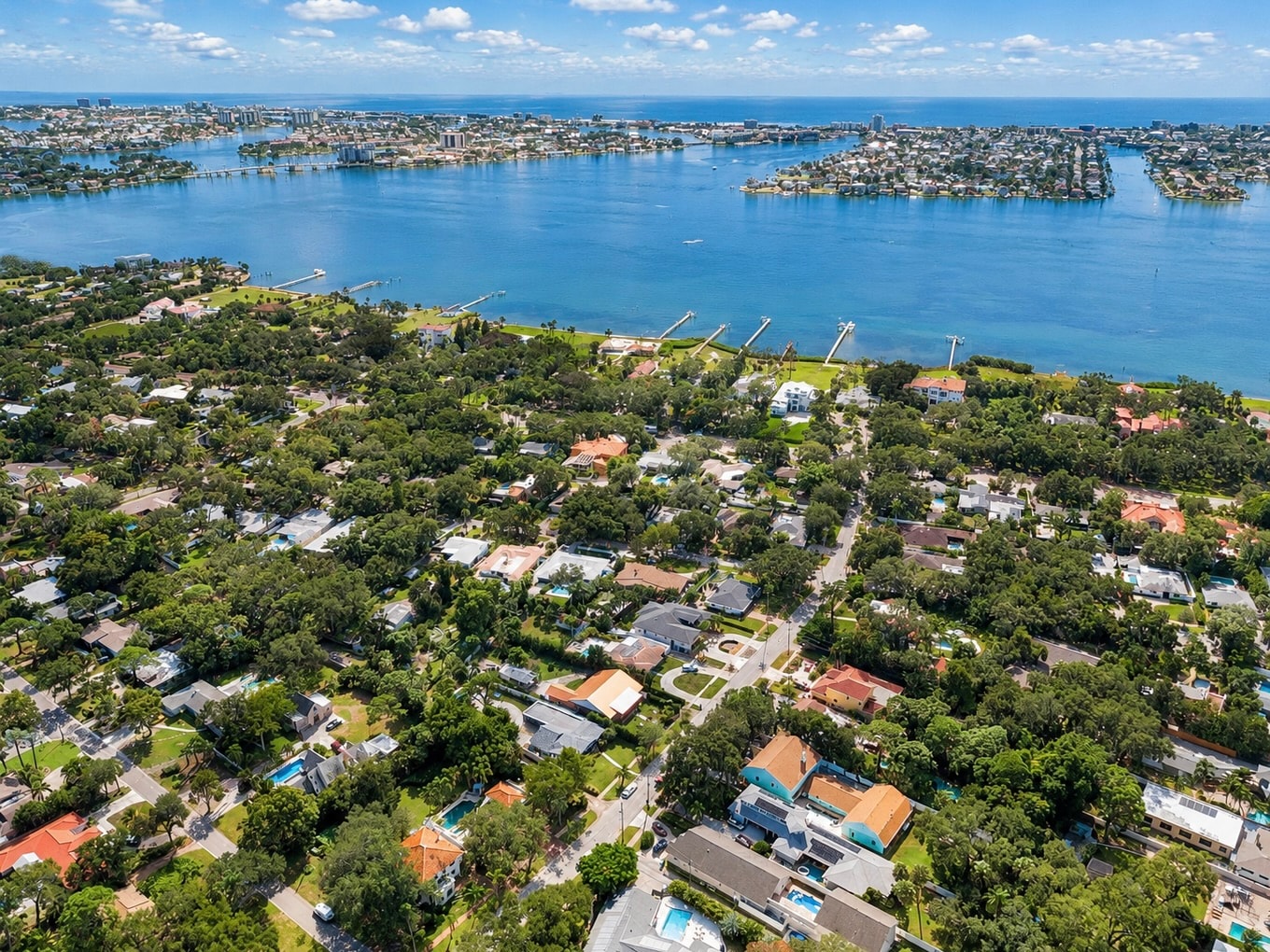
The Location
St. Petersburg, Florida · Pinellas County · jungle prada - Gulf Coast
The estate's position is not incidental to its value. It was chosen by a man who thought in engineering terms — who understood that site, elevation, and orientation are as permanent as the masonry he built upon them.
St. Petersburg, Florida
A City of Uncommon Character
St. Petersburg occupies the southern tip of the Pinellas Peninsula — a narrow finger of land between Tampa Bay to the east and the Gulf of Mexico to the west. It is a city of extraordinary natural endowment: more than 360 days of sunshine per year, a waterfront of exceptional beauty, and a cultural life that has grown, over the past two decades, into one of the most vital in the American South.
The city that Alfred Stecker chose in the early 1920s was already the destination of the prosperous Midwestern industrialist class — a place where the great families of Detroit, Chicago, and Cleveland came to escape the winter and to build the houses that expressed their achievement. The tradition of serious residential architecture that Stecker joined was already well established; his estate became one of its finest examples.
Today, St. Petersburg is a city in full flourishing. Its downtown waterfront, its museum district anchored by the Salvador Dalí Museum, its restaurant and arts scene, and its proximity to the Gulf beaches have made it one of the most sought-after addresses in Florida — a city that combines the cultural density of a major metropolitan center with the ease and warmth of the Gulf Coast.

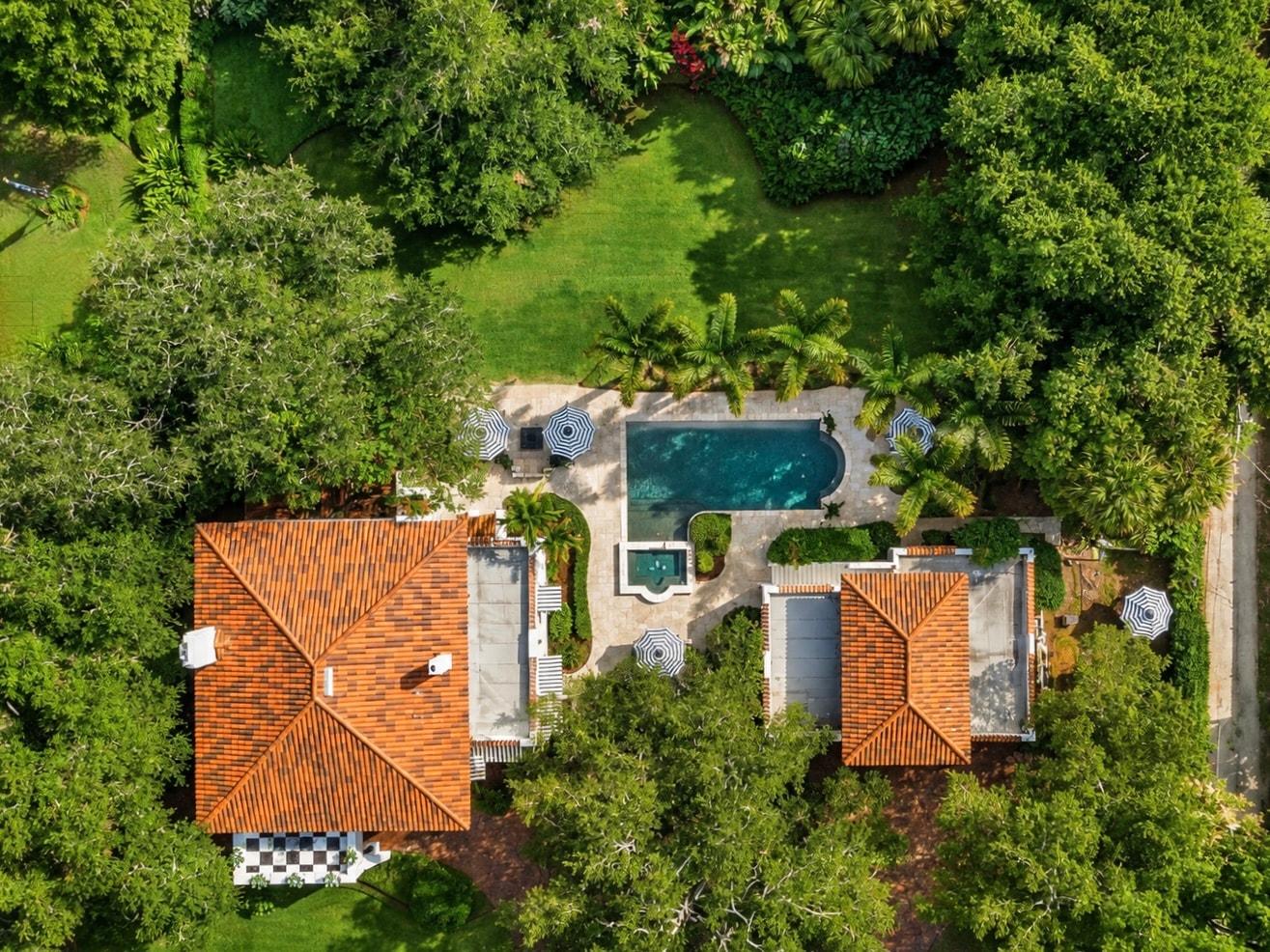
The Bluff Position
Elevation · Flood Zone Exemption · Prevailing Breeze
The estate's elevated bluff position is among its most significant physical attributes — and among the most difficult to replicate. The site sits at an elevation that places it entirely outside the flood plain, a fact of increasing consequence in the coastal Florida real estate market. Where comparable waterfront and near-waterfront properties carry flood insurance obligations and vulnerability to storm surge, the Stecker Estate's bluff position exempts it from both.
The elevation also captures the prevailing Gulf breeze — the southwest wind that moderates the subtropical climate and makes outdoor living possible for the greater part of the year. Stecker understood this when he selected the site; the orientation of the principal rooms and the placement of the conservatory and terrace all respond to the prevailing wind direction with the intelligence of an architect who had studied the site before he designed for it.
The views that the bluff position affords — across the tree canopy, toward the water, and into the wide Florida sky — are views that no amount of construction expenditure can purchase on a flat site. They are a function of elevation, and elevation, on the Pinellas Peninsula, is a finite and irreplaceable resource.
Flood Zone
X — No flood insurance required
Elevation
Bluff position · above storm surge
Orientation
Southwest · prevailing Gulf breeze
Views
Canopy · water · open sky
The Gulf Beaches
St. Pete Beach · Treasure Island · Pass-a-Grille · Fort De Soto
The Gulf beaches that define the western edge of the Pinellas Peninsula are among the finest in the continental United States — consistently ranked among the top beaches in the country for the quality of their sand, the clarity of their water, and the warmth of their climate. St. Pete Beach, Treasure Island, Pass-a-Grille, and Fort De Soto are all within a short drive of the estate.
The proximity to the beaches without the vulnerability of a beachfront position is one of the estate's defining locational advantages. Beachfront properties on the Gulf carry the full burden of coastal exposure — flood risk, wind exposure, salt air corrosion, and the insurance costs that accompany them. The Stecker Estate captures the lifestyle benefit of beach proximity while its bluff position insulates it from every one of those liabilities.


The St. Petersburg Lifestyle
Culture · Dining · The Outdoors
St. Petersburg has undergone a remarkable transformation in the past two decades. The city that was once known primarily as a retirement destination has become one of the most culturally dynamic cities in the American South — a place with a serious restaurant scene, a thriving arts district, a world-class museum in the Salvador Dalí Museum, and a waterfront that has been developed with the intelligence and ambition of a city that understands what it has.
The outdoor life that the climate makes possible is exceptional. Boating, sailing, kayaking, cycling, and golf are all available within minutes of the estate. The Pinellas Trail — one of the longest urban trails in the United States — runs through the city. The Tampa Bay area's professional sports franchises, its international airport, and its cultural institutions are all within easy reach.
For the buyer who intends to use the estate as a primary residence, the quality of daily life in St. Petersburg is a principal part of the proposition. For the buyer who intends a seasonal use, the ease of access — Tampa International Airport is thirty minutes from the estate — makes the logistics of a winter residence entirely manageable.